
7 Tips for Buying Vintage Military Boots Wholesale

Buying Vintage Military Boots wholesale requires more than spotting a rugged pair at a low price. Every carton can contain different sizes, eras, materials, and wear levels. A promising deal may hide cracked leather, hardened rubber, missing eyelets, or inconsistent labeling.

Vintage footwear consultant James M. Haynes once said, “A boot’s history matters as much as its appearance.” That principle guides this practical outline. Buyers should examine supplier records, manufacturing details, country of origin, and available condition photographs. Clear evidence builds trust. Vague descriptions create risk.

The following seven tips focus on authentication, grading, sizing, supplier communication, pricing, storage, and customer expectations. They also consider responsible trade practices. Buyers should confirm invoices, product origins, import requirements, and consumer safety standards before placing orders. Legal compliance protects both businesses and customers.

Small details matter. Look for dry seams, uneven soles, faded stamps, and repaired stitching. Request sample pairs before committing to a large shipment. Ask whether the inventory is deadstock, used, restored, or mixed. These categories should never be treated as identical.

Some mistakes are unavoidable. A careful buyer can still misjudge demand or receive inconsistent sizing. That is part of the learning process. Record every defect, compare each shipment, and revise your purchasing rules. Good wholesale sourcing is not purely about finding old boots. It is about building a reliable, transparent, and commercially sustainable Vintage Military Boots collection.
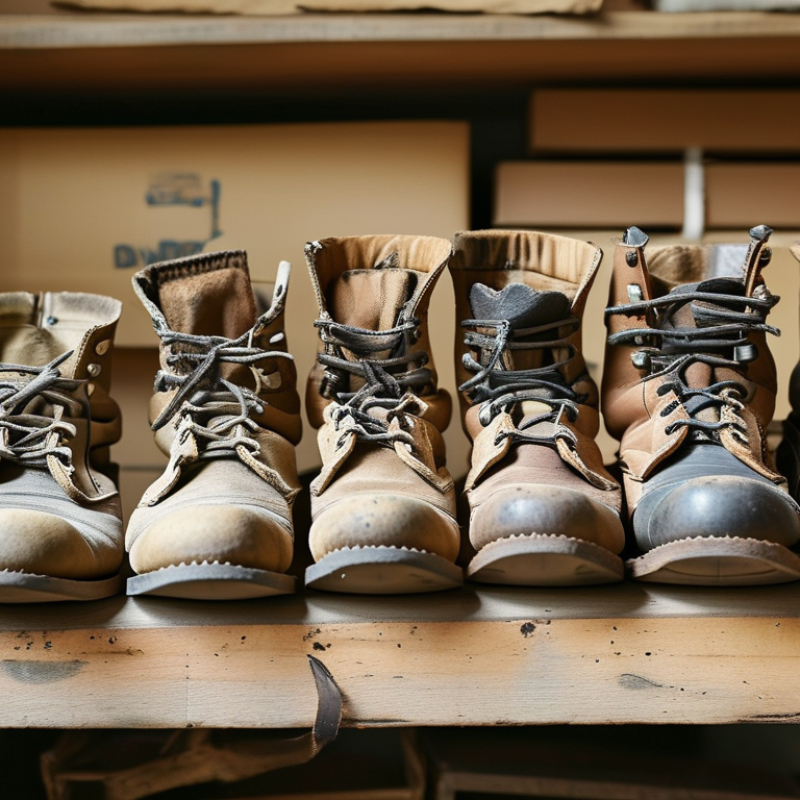
7 Tips for Buying Vintage Military Boots Wholesale

Understanding Vintage Military Boot Types and Wholesale Standards

When sourcing vintage military boots wholesale, identify the boot type before comparing prices. Combat boots usually feature durable leather and reinforced toes. Service boots may look more formal, with slimmer soles. Jump boots often provide firmer ankle support. Cold-weather pairs need insulated linings, while jungle styles use lighter construction and ventilation. Names vary by country and production period. Ask for measurements, not only listed sizes. Old sizing can be surprisingly inconsistent.

Wholesale standards should cover material, construction, condition, and traceability. Request clear photos of soles, stitching, eyelets, heels, and inner labels. Check whether leather is cracked, hardened, or heavily treated. Rubber soles can look sound but crumble after storage. Ask for a condition grade, defect rate, packing method, and replacement policy. Confirm whether each pair is authentic vintage, a period-style reproduction, or mixed stock. That distinction affects pricing and customer expectations. Small sample orders are safer than trusting a polished catalog.

Inspect at least one pair from every size range. Measure insole length and shaft height manually. Keep records of batch numbers and received defects. Reliable sellers should answer consistently, not vaguely. Ethical sourcing and applicable trade requirements also matter. Do not accept unclear paperwork. I have learned that “excellent condition” can mean different things. A photographed sample may not represent the whole shipment. Build room for that risk. Expect some imperfections, but price them honestly.

Verifying Authenticity, Age, and Military Provenance

7 Tips for Buying Vintage Military Boots Wholesale

Verifying Authenticity, Age, and Military Provenance

Buying vintage military boots wholesale requires more than checking their appearance. Start with clear photographs of soles, stitching, eyelets, labels, and interior markings. Genuine age often appears through natural leather creasing, softened edges, and uneven color. Artificial distressing can look too regular.

Ask the supplier for production dates, stock records, surplus documents, or previous inventory notes. Reliable sellers should explain where the boots came from and whether the source was lawful and traceable. Military provenance is stronger when several details agree, such as period construction, correct materials, and consistent markings.

Inspect samples before placing a large order. Measure foot length, width, shaft height, and sole thickness. Vintage sizing can differ sharply from modern sizing. I once trusted an old size chart and received boots that ran nearly one size smaller. That mistake was expensive.

Check for dry leather, cracked midsoles, loose stitching, rusted hardware, and hidden odor. Ask how many pairs have matching sizes and conditions. A mixed wholesale lot may contain excellent pairs and repair-grade pairs. Request a condition breakdown in writing.

Compare supplier photographs with independent museum archives, military catalogues, and specialist references. Avoid relying on one online comment. Small inconsistencies matter. Missing labels do not always prove a replica, but confident claims without evidence deserve caution.

Confirm packaging, inspection terms, and return conditions before payment. Keep invoices and written descriptions. Even experienced buyers miss details. Careful records make quality disputes easier to review.

7 Tips for Buying Vintage Military Boots Wholesale - Verifying Authenticity, Age, and Military Provenance

A practical wholesale inspection framework for evaluating vintage military footwear before purchase.

No. Buying Tip What to Verify Reliable Evidence Wholesale Inspection Method Common Red Flags Decision Standard
1 Match the construction to the claimed era Check the sole pattern, stitching, eyelets, heel shape, lining, insole, and leather treatment against period references. Dated military specifications, archived catalogs, period photographs, and documented museum or collection references. Request clear photographs of both sides, the sole, tongue, interior, heel, and close-up construction details for every production variation. Modern components combined with an older-looking upper; inconsistent stitching; newly uniform distressing; construction details that belong to different periods. Proceed only when construction is period-consistent.
2 Treat markings as clues, not proof Examine stamped sizes, contract or stock references, date codes, inspection marks, and handwritten inventory notes. Legible markings that match the boot's construction, historical terminology, format, and documented production practices. Record each marking by location and photograph it under neutral lighting. Compare repeated markings across multiple pairs. Fresh-looking ink or stamps; incorrect abbreviations; identical marks on supposedly unrelated production lots; labels placed in unusual locations. Use markings to support, never replace, physical verification.
3 Separate genuine age from artificial distressing Assess oxidation, creasing, edge wear, leather absorption, sole compression, thread aging, and wear distribution. Wear that follows normal use patterns: toe and heel abrasion, natural flex creases, uneven color change, and consistent aging inside and outside. Inspect a representative sample from the top, middle, and bottom of the lot. Photograph defects and grade condition separately from age. Uniform scuffing on all pairs; clean interiors with heavily aged exteriors; sharp artificial cuts; fresh adhesive or recently darkened leather. Do not pay an age premium without consistent aging evidence.
4 Verify military provenance separately Determine whether the boots were issued, contract-made, surplus, privately purchased, or merely styled after military footwear. Original inventory records, dated acquisition documentation, authenticated collection history, storage photographs, or consistent lot records. Ask for provenance by lot, not only a verbal claim. Ensure the paperwork describes the same construction, quantity, sizes, and condition as the goods. Vague claims such as “battle-worn” without records; unrelated paperwork; mixed civilian and military patterns; unexplained gaps in ownership history. Label provenance as documented, supported, or unverified.
5 Audit material and functional condition Check leather brittleness, mildew, dry rot, sole separation, cracked rubber, damaged eyelets, odor, and structural deformation. A physical sample inspection, flexibility test, moisture and odor check, plus close-up photographs of every material defect. Create condition grades such as New Old Stock, Very Good, Repairable, and Parts Only. Count each grade before calculating the landed cost. Brittle uppers, powdery rubber, hidden sole gaps, persistent damp odor, active mold, or a high repair ratio omitted from the listing. Reject lots with unsafe deterioration or undisclosed repairs.
6 Analyze size distribution and pair completeness Confirm marked sizes, actual interior measurements, left-right pairing, width variation, and the percentage of saleable pairs. A pair-level inventory listing with size, width, condition, measurement, and clear notation for mismatched or incomplete pairs. Sample at least 10% of the lot, or a minimum of 10 pairs when the lot is smaller. Reconcile the sample against the inventory sheet. Large quantities of unusual sizes; missing mates; inconsistent size markings; measurements that differ materially from the stated size. Price the lot by saleable pairs, not by total units.
7 Protect the purchase with sampling and written terms Define authenticity, condition, provenance, inspection rights, acceptable defect rates, shipping responsibility, and return procedures. A signed purchase specification, pre-shipment sample approval, dated photographs, packing list, and documented inspection results. Use a representative sample that includes different sizes, conditions, markings, and production variations before approving the full lot. “As-is” language with no defect definition; refusal to provide samples; substitutions after approval; unrecorded changes in quantity or condition. Purchase only when the evidence and contractual terms are auditable.
Recommended lot record: Lot reference, claimed period, construction notes, markings, provenance status, size distribution, condition grades, defect count, sample size, photographs, and agreed inspection terms.

Inspecting Materials, Sizes, Condition, and Repair Quality

Buying vintage military boots wholesale demands careful, practical inspection. I have handled mixed cartons where photographs hid serious defects. Check leather thickness, stitching, soles, eyelets, and lining before discussing price. Dry leather may crack around the ankle during flexing. Look closely there. Rub a clean cloth across the surface. Excessive dye transfer can reveal unstable finishing or storage damage. Examine several pairs, not just the best sample.

Sizing creates another common problem. Vintage labels can differ from modern measurements. Measure the inner length, ball width, and shaft height of each pair. Record those figures beside the labeled size. Ask for a size breakdown before ordering. A carton full of narrow pairs may sell slowly, even when the average size looks attractive. I once trusted labels too quickly. That mistake reduced my usable stock.

Condition grading should separate unworn, lightly worn, repaired, and heavily worn pairs. Request sharp images of heels, toe caps, and inside seams. Repair quality matters more than repair presence. Check whether replacement stitching is even, tight, and matched to the original construction. Press repaired soles gently and watch for gaps or adhesive marks. Seek written grading standards and sample inspections from the supplier. Keep invoices and condition notes for each shipment. Occasionally, a flawed pair still proves useful for display or parts, but that should never be assumed in your cost calculation.

Comparing Suppliers, Minimum Orders, and Wholesale Pricing

7 Tips for Buying Vintage Military Boots Wholesale

Comparing suppliers starts with their inspection process, not their website design. Ask for recent photos showing soles, stitching, eyelets, labels, and interior wear. Request a written grading system for used, refurbished, and unsorted pairs. A reliable supplier should explain storage conditions and cleaning methods clearly. I once trusted a polished catalog and ignored vague grading language. That judgment was costly. Ask about sourcing records and lawful resale documentation. Good paperwork supports authenticity and reduces avoidable disputes.

Minimum orders can change the real cost dramatically. Compare suppliers using the same quantity, size range, and condition grade. A low minimum order may carry higher unit pricing or handling fees. Check whether mixed sizes are allowed. They usually are. Confirm replacement terms for damaged, mismatched, or unusable pairs. Shipping weight matters, especially with thick leather and reinforced soles. Request a sample order before committing to a full pallet. It feels slower. It can prevent expensive surprises.

Wholesale pricing should include every charge, including packing, inspection, freight, and payment fees. Calculate the landed cost per sellable pair, not merely the invoice price. Ask whether discounts apply at fixed volume levels. Negotiate carefully, but do not chase the cheapest offer blindly. Extremely low pricing may indicate poor grading or inconsistent inventory. Review supplier response times and references from comparable buyers. Keep written records of every promise. Recheck your assumptions after the first delivery. Real stock often differs from sample photos.

Wholesale Buying Benchmarks for Vintage Military Boots

Comparing anonymous supplier types shows how minimum order quantities and estimated wholesale prices can affect purchasing decisions. Lower minimums generally offer more flexibility, while larger orders may reduce the average cost per pair.

Planning Shipping, Storage, Resale, and Legal Compliance

7 Tips for Buying Vintage Military Boots Wholesale

Planning Shipping, Storage, Resale, and Legal Compliance

Buying vintage military boots wholesale requires more than finding a low unit price. Inspect several pairs before ordering, checking sole wear, stitching, odor, cracks, and size consistency. Ask for recent warehouse photos. Old stock often varies more than expected. Calculate the landed cost, including freight, duties, inspection fees, packaging, and possible cleaning. A cheap carton can become expensive after delivery.

Choose strong cartons, paper padding, and moisture-resistant inner bags for shipping. Avoid sealing damp boots inside plastic. They may arrive with mildew or weakened leather. Confirm the carrier’s handling rules and request tracking for every shipment. Store boots on raised shelving in a cool, dry, ventilated room. Keep cartons away from walls and direct sunlight. Record quantities, sizes, condition, and storage dates in a simple inventory file.

Before resale, photograph each pair clearly and describe wear, repairs, missing parts, and sizing differences. Honest listings reduce disputes and build buyer trust. Check import rules, customs declarations, labeling requirements, and product safety standards in your destination market. Confirm that materials and treatments are permitted, and retain invoices, supplier details, and inspection records. Do not rely on verbal assurances alone. I have learned that rushed paperwork causes more trouble than slow purchasing. When uncertain, consult a qualified customs or legal professional.

The Health & Safety of our Community is Our Priority For this reason, we will be changing our business hours to:

MON - SAT 12pm - 5pm

Or by appointment

We will communicate any updates through our social media and other regular mediums. Thank you for being a loyal customer!

Learn More

Top The owner of this website has made a commitment to accessibility and inclusion, please report any problems that you encounter using the contact form on this website. This site uses the WP ADA Compliance Check plugin to enhance accessibility.